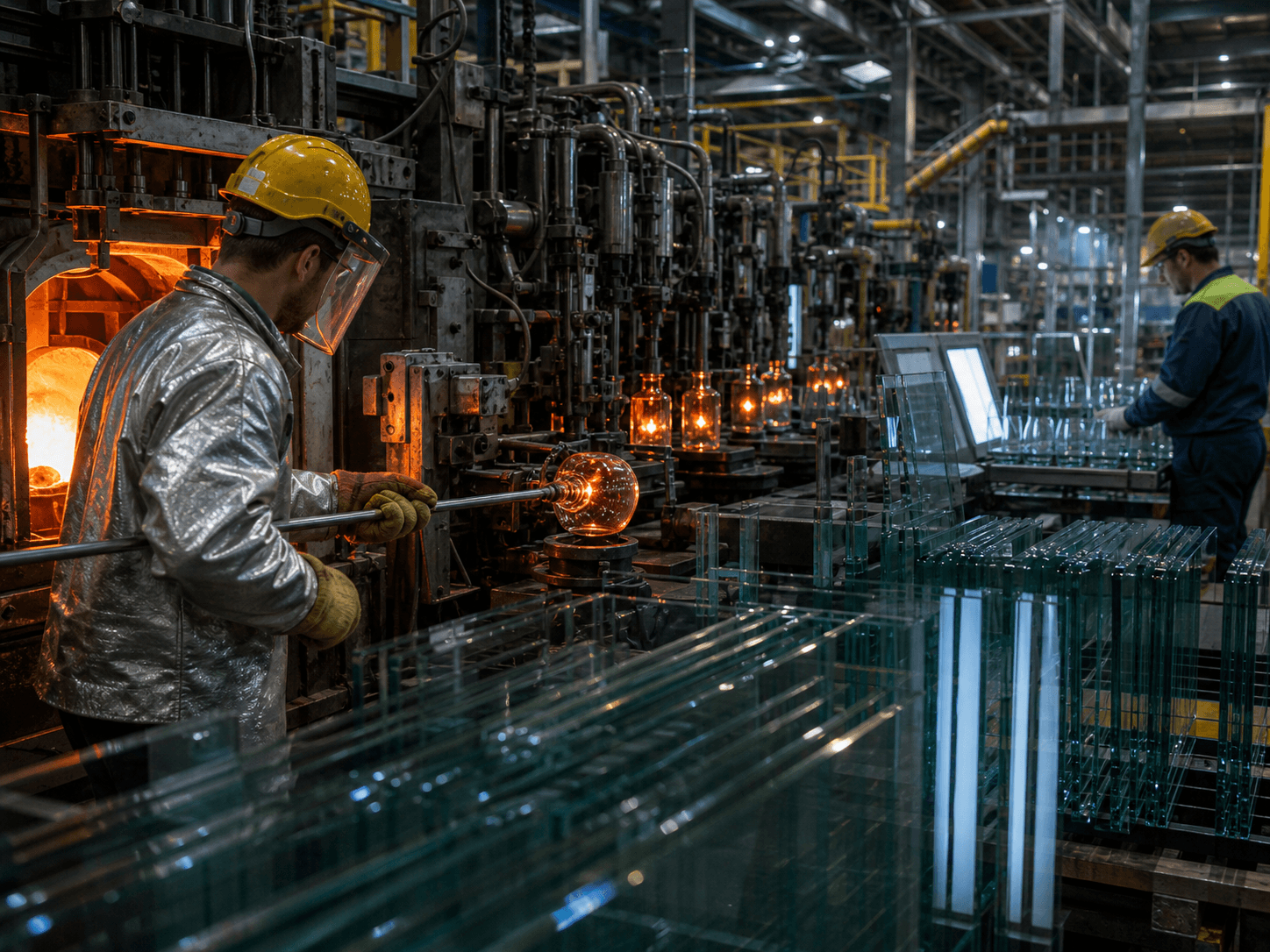
How to Save Energy in Glass Manufacturing
Glass manufacturing is an energy-intensive process, requiring significant amounts of heat and power to transform raw materials into finished products. The industry relies heavily on electricity, gas, and other fuels to maintain production levels. With rising energy costs and increasing environmental concerns, finding ways to save energy has become essential for glass manufacturers. This article explores various strategies to optimise energy use, ultimately reducing costs and environmental impact.
12 Practical Ideas for Saving Energy on Glass Manufacturing
- Retrofitting LED lighting in manufacturing facilities to significantly reduce electricity consumption and enhance energy efficiency — Switching to LED lighting can reduce energy use by 75–90 per cent, offering substantial savings.
- Implementing variable speed drives to optimise motor and pump energy efficiency in glass production processes — Variable speed drives allow motors to operate more efficiently by adjusting speeds to match demand.
- Utilising smart meters to monitor and manage energy consumption in real-time, enhancing efficiency and reducing waste — Smart meters provide insights into energy use patterns, facilitating timely adjustments and savings.
- Regular maintenance of vehicle and machinery engines to maintain optimal performance and reduce diesel fuel consumption — Preventative maintenance ensures engines run efficiently, lowering fuel usage and emissions.
- Training drivers on fuel-efficient driving techniques to improve vehicle fuel economy and reduce energy costs — Educating drivers on efficient driving habits can lead to significant fuel savings and lower emissions.
- Installing high-efficiency burners and optimising combustion for improved gas and propane energy use in furnaces — Efficient burners reduce fuel consumption and increase thermal efficiency in industrial furnaces.
- Enhancing facility insulation to minimise heat loss and improve energy efficiency in glass manufacturing plants — Proper insulation retains heat, reducing energy required for heating and maintaining consistent temperatures.
- Implementing solar panels to harness renewable energy and reduce reliance on traditional energy sources — Solar panels can provide a sustainable energy supply. Learn more here.
- Exploring wind turbine opportunities to supplement energy needs with renewable sources in glass manufacturing — Wind turbines offer an alternative energy source. Discover more here.
- Conducting regular staff training sessions to promote energy-saving practices and enhance overall operational efficiency — Training staff on energy-efficient practices fosters a culture of conservation and continuous improvement.
- Implementing a comprehensive energy monitoring system to track consumption patterns and identify areas for improvement — Energy monitoring systems provide detailed insights, enabling targeted actions to enhance efficiency.
- Establishing a continuous improvement programme focused on energy efficiency to drive ongoing savings in glass production — A structured programme encourages innovation and sustained energy savings over time.
Electricity Savings
Electricity is a major cost in glass manufacturing, but there are numerous ways to reduce consumption. Retrofitting LED lighting and implementing variable speed drives are effective strategies. LEDs can save up to 90 per cent on lighting costs, while variable speed drives ensure motors and pumps operate efficiently, reducing unnecessary energy use.
Diesel and Fuel Efficiency
Fuel costs can be reduced through regular maintenance of vehicles and machinery, which ensures optimal performance and lowers fuel consumption. Additionally, training drivers in fuel-efficient techniques can further enhance savings by promoting behaviours that reduce fuel use and emissions.
Gas and Propane Use
Gas and propane are crucial for heating in glass manufacturing. High-efficiency burners, combined with optimised combustion, can significantly reduce fuel usage. Moreover, improving facility insulation helps to maintain desired temperatures, minimising the energy needed for heating.
Renewable Energy Opportunities
Renewable energy offers a sustainable alternative to traditional energy sources. Installing solar panels can reduce electricity reliance, while wind turbines provide another renewable option. These technologies not only decrease energy costs but also contribute to environmental sustainability. For more information on solar panels, visit this link, and for wind turbines, check this link.
Behavioural and Operational Changes
Behavioural changes can have a significant impact on energy efficiency. Regular staff training on energy-saving practices is essential to building a culture of conservation. When employees understand the importance of energy efficiency, they are more likely to adopt practices that reduce consumption and waste.
Monitoring and Continuous Improvement
Monitoring energy use is crucial for identifying inefficiencies and areas for improvement. Implementing a comprehensive energy monitoring system enables real-time tracking of consumption patterns. Establishing a continuous improvement programme focused on energy efficiency ensures sustained savings and encourages ongoing innovation in energy management.
Final Thoughts
Energy efficiency in glass manufacturing is not only about reducing costs but also about enhancing sustainability and competitiveness. By adopting a combination of technological solutions, behaviour changes, and continuous improvement strategies, glass manufacturers can achieve significant energy savings. Implementing these practical ideas will not only lower energy bills but also contribute to a more sustainable future for the industry.