
TNUoS Charges Increasing – April 2026
What It Means for Half-Hourly Metered Business Properties
From Taurus Utility Consultants
From April 2026, UK businesses—particularly those with half-hourly (HH) metered electricity supplies—are facing one of the most significant increases in non-commodity energy costs in recent years. Transmission Network Use of System (TNUoS) charges, a core component of business electricity bills, are rising sharply, with widespread implications for budgeting, procurement, and energy strategy.
For organisations already navigating volatile wholesale markets, this additional cost pressure reinforces the importance of proactive energy management and expert consultancy support.
What Are TNUoS Charges?
TNUoS charges recover the cost of operating, maintaining, and upgrading the UK’s high-voltage electricity transmission network. These costs are set annually by the National Energy System Operator (NESO) and passed through suppliers to end users.
They fund essential infrastructure, including:
- Grid reinforcements
- Connection of renewable energy sources
- System balancing and reliability measures
For half-hourly metered businesses—typically larger commercial and industrial users—these charges are often more visible and more complex than for smaller sites.
Why Are Charges Increasing in April 2026?
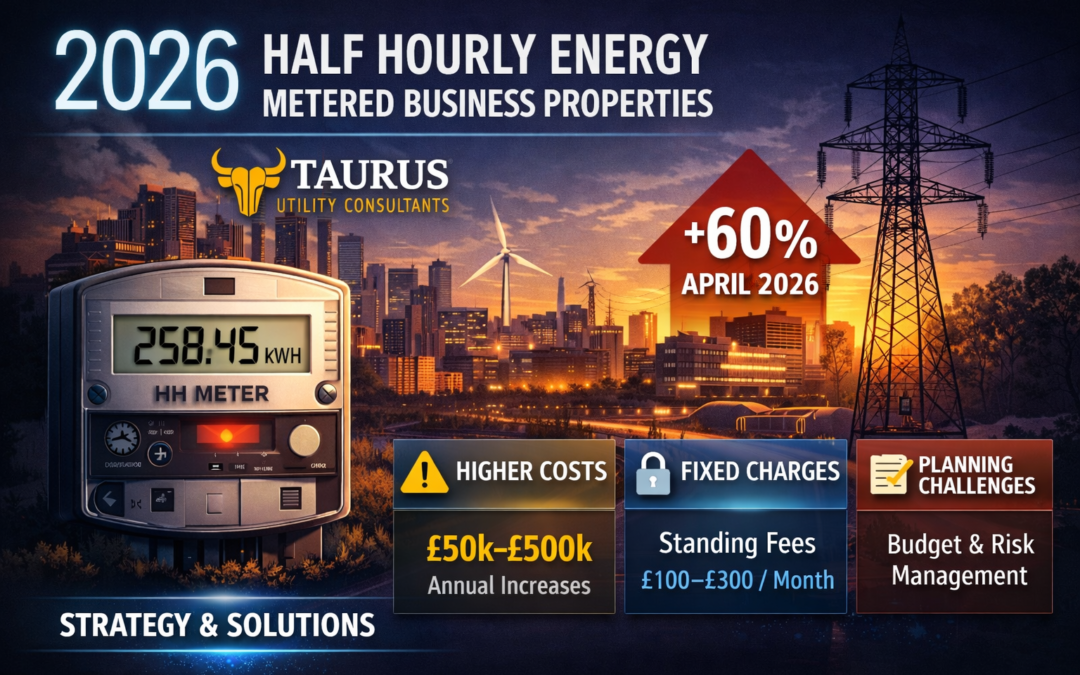
The April 2026 increase is substantial, with TNUoS charges rising by around 60% year-on-year for many businesses.
Several key drivers are behind this surge:
1. Investment in Net Zero Infrastructure
The UK’s transition to renewable energy requires major upgrades to the transmission network. Offshore wind, solar farms, and decentralised generation all need new connections and capacity.
2. Regulatory Changes (RIIO-ET3)
The latest price control framework allows significantly higher revenue for transmission operators, with total TNUoS revenue expected to rise sharply this decade.
3. Ageing Infrastructure
Much of the UK grid infrastructure is decades old and requires replacement or reinforcement, adding further cost pressure.
4. Increased Electrification
As businesses electrify heating, transport, and processes, peak demand increases—placing greater strain on the grid and driving higher network costs.
The Impact on Half-Hourly Metered Businesses
Half-hourly metered (HH) sites—where electricity usage is recorded every 30 minutes—are particularly exposed to TNUoS changes.
Significant Cost Increases
- Average rates rising from ~£16/MWh to ~£31/MWh
- Standing charge increases of £100–£300/month for mid-sized sites
- Large industrial users potentially facing £50,000–£500,000 annual increases
Overall, this may translate into a 5–15% increase in total electricity bills depending on consumption and location.
Shift to Fixed Costs
Following Ofgem’s Targeted Charging Review (TCR), TNUoS is now largely made up of fixed residual charges, meaning:
- Costs are based on capacity banding rather than usage
- Reducing consumption does not necessarily reduce charges
- Costs are applied as daily standing charges per meter
This structural shift fundamentally changes how businesses manage energy costs.
The Role of Triads – Still Relevant?
Historically, HH customers could reduce TNUoS costs by avoiding peak demand during “Triad” periods—three half-hour windows of highest national demand.
While Triads still influence a portion of the charge, their importance has reduced significantly. The majority of TNUoS costs now come from fixed elements, limiting the effectiveness of traditional avoidance strategies.
Why This Matters for Business Planning
The scale and structure of these increases create several challenges:
Budget Uncertainty
TNUoS increases are often passed through by suppliers, meaning even fixed contracts may not fully protect businesses.
Reduced Control
With costs less linked to consumption, traditional energy-saving measures may have less financial impact.
Long-Term Cost Escalation
Forecasts suggest continued increases through to 2030, with total TNUoS revenue expected to more than double over the decade.
For energy-intensive sectors, this represents a material risk to margins and competitiveness.
How Taurus Utility Consultants Can Help
In this evolving landscape, expert support is essential. Energy consultants like Taurus Utility Consultants offer strategic guidance for HH metered businesses.
1. Cost Forecasting & Budgeting
Accurate modelling of future TNUoS costs allows businesses to plan effectively and avoid unexpected financial shocks.
2. Capacity (kVA) and Banding Reviews
Since charges are linked to agreed capacity and voltage levels, optimising these parameters can reduce exposure to higher charging bands.
3. Contract Analysis
Consultants can assess whether suppliers are passing through TNUoS increases and identify opportunities to renegotiate terms.
4. Half-Hourly Data Optimisation
HH metering provides granular insight into energy usage. With expert analysis, businesses can:
- Identify inefficiencies
- Adjust operational patterns
- Improve overall energy strategy
5. Strategic Energy Procurement
By aligning procurement strategies with network cost trends, businesses can mitigate risk and secure more favourable long-term outcomes.
Conclusion
The April 2026 TNUoS increase marks a fundamental shift in how electricity network costs impact UK businesses—particularly those with half-hourly metered properties. With charges rising sharply and becoming increasingly fixed, organisations must rethink how they approach energy management.
While these costs are largely unavoidable, they are not unmanageable. With the right strategy, data insights, and expert guidance from specialists like Taurus Utility Consultants, businesses can navigate these changes, control risk, and position themselves for a more resilient energy future.