
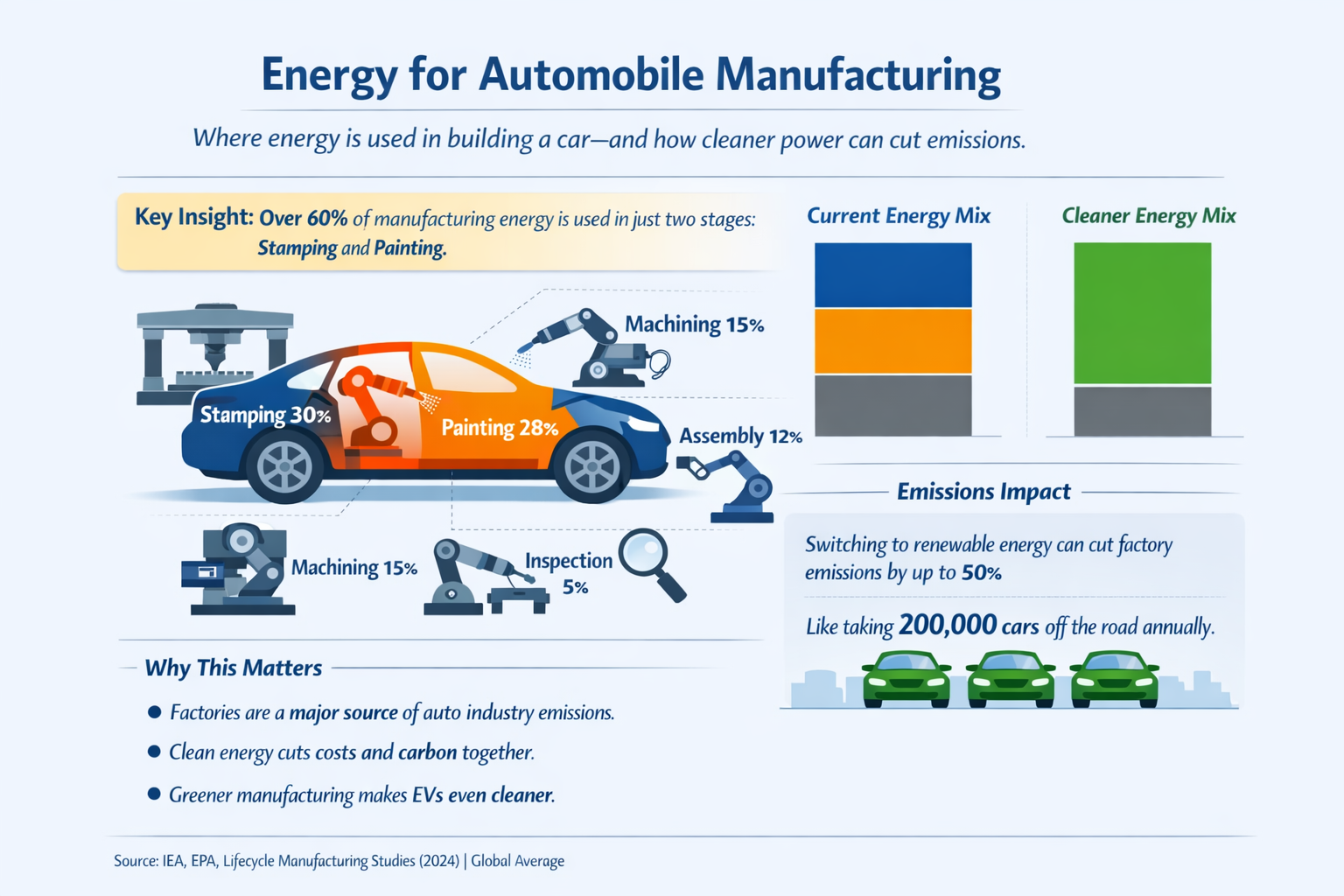
Energy for Automobile Manufacturing
At Taurus Utility Consultants, we recognise that energy is the driving force behind every successful production line. From precision robotics and automated welding to painting, assembly, and quality control, the automotive industry demands a reliable, efficient, and sustainable energy supply. Our approach delivers long-lasting performance, superior service, and complete peace of mind, enabling manufacturers to focus on innovation, efficiency, and excellence.
We provide tailored, high-performance energy solutions designed specifically for the automotive sector. Our systems combine renewable technologies, smart energy management, and efficient power infrastructure to ensure consistent performance across every stage of production. Whether integrating solar energy, heat recovery systems, or advanced power monitoring, our solutions are built to reduce downtime, control energy costs, and extend equipment lifespan. Each installation is designed for resilience — capable of supporting high-demand manufacturing environments where precision and reliability are non-negotiable.
What sets us apart is our commitment to partnership and service. We work closely with clients to understand production schedules, load demands, and operational challenges before designing a bespoke energy system that fits seamlessly within existing facilities. Our dedicated engineers oversee installation, testing, and maintenance, supported by real-time monitoring to ensure peak efficiency. When you need support, we respond swiftly — keeping your energy systems running at full capacity.
Above all, our approach provides peace of mind. With dependable, sustainable energy powering your operations, you can reduce emissions, enhance productivity, and future-proof your manufacturing.
At Taurus Utility Consultants, we don’t just power production lines — we power performance, innovation, and progress, giving you confidence that your energy systems are built to last and your success is built to endure.

Direct Energy Greenhouses and Horticulture
These are the main energy types used directly in greenhouses and horticultural facilities:
Electricity
(LED or HID lamps), irrigation pumps, ventilation fans, climate control systems, and automated shading or misting systems.
Natural Gas / Propane / Fuel Oil
Heating greenhouses in cold seasons using boilers, furnaces, or radiant heaters.
Diesel / Fuel
For tractors, tillers, and other field equipment used in outdoor horticulture.
Renewable Energy
Solar panels for powering irrigation or ventilation systems, geothermal energy for heating, and biomass boilers for sustainable heat generation.
Indirect Energy Use
Energy is also consumed indirectly in the production and transport of:
Fertilisers and growing media
Manufacturing and transportation.
Seeds, pots, and trays
Production of plastic or biodegradable materials
Infrastructure
Construction and maintenance of greenhouses, lighting systems, and irrigation networks.
Emerging Trends in Energy Efficiency
Modern greenhouse and horticulture operations are adopting smart energy management to cut costs and emissions:
LED
LED grow lights (more efficient than traditional lamps)
Insulation
Thermal screens and insulation to reduce heat loss
Solar-powered Irrigation
Solar-powered irrigation and climate control systems
Rainwater Harvesting
Rainwater harvesting and recirculation pumps powered by renewable energy
Greenhouses and horticulture use electricity, heating fuels, and increasingly renewable energy to create the perfect environment for plant growth — with a strong shift toward energy efficiency, automation, and sustainability to improve productivity and lower costs.