
Energy for Electronics Manufacturing
At Taurus Utility Consultants, we understand that precision, consistency, and reliability are essential to every production line. In an industry where even the slightest power fluctuation can affect product quality or halt operations, dependable energy isn’t just important — it’s critical. That’s why our approach focuses on delivering high-performance, long-lasting, and intelligently managed energy solutions that provide you with better service and complete peace of mind.
Our systems are designed specifically for the demanding environments of electronics manufacturing. We offer advanced, energy-efficient technologies such as smart power distribution, solar integration, backup battery systems, and energy monitoring tools. Each solution is built for durability, ensuring stable voltage, reduced downtime, and lower operating costs. By combining innovation with reliability, we help you maintain uninterrupted production while improving sustainability and energy efficiency across your facility.
What truly distinguishes us is our commitment to service excellence. We partner with you from the outset — assessing your site, analysing your energy loads, and designing a bespoke system tailored to your operations. Our engineers provide ongoing maintenance, real-time performance tracking, and rapid response support, ensuring your energy system runs flawlessly.
With Taurus Utility Consultants, you can focus on innovation and production with confidence, knowing your energy supply is secure, efficient, and built to last. We don’t just power your equipment — we power your productivity, sustainability, and success.
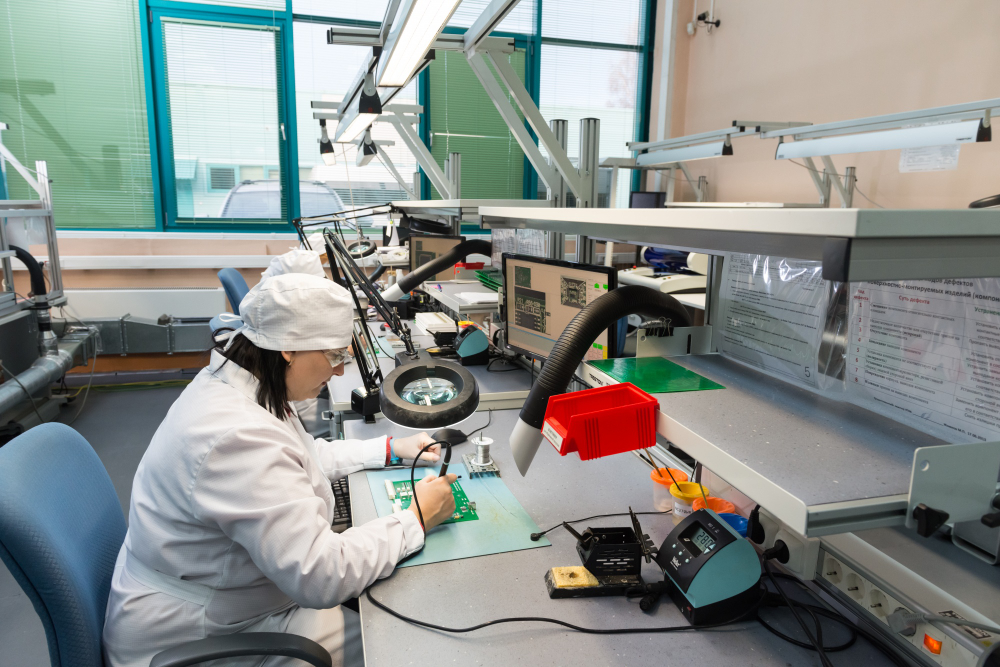

Energy Use in Electronics Manufacturing
The electronics manufacturing industry is highly energy-dependent. From producing microchips to assembling consumer devices, it requires precise, continuous, and high-quality energy to maintain efficiency, accuracy, and safety. Energy is used not only for machinery and equipment but also for climate control, cleanrooms, and testing facilities, where even small fluctuations can affect product quality.
Electricity
The primary energy source. Powers machinery for wafer fabrication, soldering, circuit assembly, surface-mount technology (SMT) lines, robotics, testing equipment, and conveyor systems. It also runs HVAC systems, cleanrooms, compressors, lighting, and data monitoring equipment.
Natural Gas / Propane
Used in heating, drying, and certain manufacturing processes, as well as in boilers for steam and hot water generation.
Compressed Air Systems
Essential for operating pneumatic tools, automated production lines, and air filtration systems.
Renewable Energy
Increasingly adopted through on-site solar power, energy-efficient cooling systems, and heat recovery units to reduce carbon emissions and operating costs.
Indirect Energy Use
Raw materials
Energy for refining metals, producing semiconductors, and transporting components.
Packaging and logistics
Energy for assembling, testing, and distributing electronic goods worldwide.
Energy Efficiency and Sustainability Trends
Modern electronics manufacturers are prioritising energy-efficient and low-carbon operations through:
Smart energy
Smart energy management systems that monitor and optimise power use in real time.
LED lighting
LED lighting and efficient HVAC systems in production facilities.
Renewable energy
Renewable energy integration such as rooftop solar or power purchase agreements.
Heat recovery
Heat recovery and waste reduction technologies to minimise environmental impact.
Electronics manufacturing relies mainly on electricity, supported by natural gas, compressed air, and renewable energy for precise, reliable, and efficient operations. As the industry grows, energy efficiency and sustainability have become key drivers for competitiveness, cost savings, and environmental responsibility.