
Energy Saving in Fire Stations
The UK’s 2,600+ fire stations play a vital role in protecting communities, but their unique operational demands – including 24/7 readiness, large appliance bays, and specialist facilities – make them significant energy users. For fire and rescue services across England, Scotland, Wales, and Northern Ireland, energy costs typically account for 8-12% of non-payroll budgets, with larger services spending over £1.5 million annually. With resources increasingly focused on emergency response and prevention work, reducing energy use is a practical way to free up funds for frontline activities.
Fire stations face distinct challenges such as rapid response requirements, high air change rates in appliance bays, and the need for reliable power for critical systems. Taurus Utilities Consultants has partnered with UK fire services to deliver average energy savings of 20%, with one regional service reallocating £135,000 in annual savings to community safety programs. This 1000-word guide outlines actionable strategies tailored to fire station operations, with a UK-specific regulatory and funding context.
Baseline Assessment & Metering – Mapping Usage Patterns
Accurate data is essential to identify savings opportunities without impacting operational readiness. Fire stations require targeted metering to account for their diverse energy demands.
Actionable Steps
3. Align with public sector targets: The UK’s Greening Government Commitments (GGC) mandate a 50% reduction in carbon emissions by 2032. Baseline data provides a framework for tracking progress and demonstrating accountability to local communities.
Fire stations have distinct zones with varying energy needs; optimising these areas delivers significant savings while maintaining operational capability.
Key Strategies
Living Quarters & Administrative Areas: Dormitories, mess rooms, and offices operate on variable schedules.
Training Facilities: Drill towers, simulation rooms, and classrooms often have high energy demands.
2. Use heat recovery systems to capture waste heat from training area ventilation, repurposing it to heat domestic hot water for living quarters.
Case Study Snippet: A fire station in Cardiff upgraded appliance bay ventilation and lighting as part of a PSDS-funded project. The £31,000 investment delivered annual savings of £14,200 – a payback period of just over 2 years.
Fire stations depend on critical systems including communications, alarm panels, and backup power – these can be made more efficient without compromising resilience.
Practical Applications
1. Communications & Control Rooms: These require constant power and cooling to prevent equipment failure.
- Upgrade to variable-speed cooling units that adjust output based on room temperature and equipment load, rather than running continuously at full capacity.
- Seal cable pathways and improve insulation to reduce cool air loss, cutting cooling energy use by up to 20%.
2. Backup Power Systems: Diesel generators are essential for emergency response, but can be costly to maintain and run.
- Test generators only as required by regulatory standards, and use load banks to ensure efficient operation when activated.
- Consider integrating battery storage systems to support critical loads during short outages, reducing reliance on generators – funding is available through the UK Government’s Energy Innovation Programme
3. Water & Waste Systems: Fire stations use significant volumes of water for training and testing.
- ◦ Install water-efficient fixtures in living quarters and use rainwater harvesting systems to supply water for drill tower training and grounds maintenance.
- ◦ Fit smart meters to identify leaks promptly – a small undetected leak can waste over 10,000 litres of water annually.
Technical improvements are most effective when supported by engaged crews and clear management processes.
Actionable Initiatives
4. Implement Preventive Maintenance: Regularly service heating, ventilation, and lighting systems to ensure peak efficiency – dirty filters or poorly calibrated controls can increase energy use by 10-15%.
Funding & Compliance – Accessing UK Public Sector Support
There are dedicated funding streams and regulatory frameworks to support energy efficiency in fire stations.
Key Opportunities
• ESOS Compliance: Mandatory for large energy users, but the audit process identifies cost-saving opportunities that can be implemented with minimal upfront investment.
Conclusion
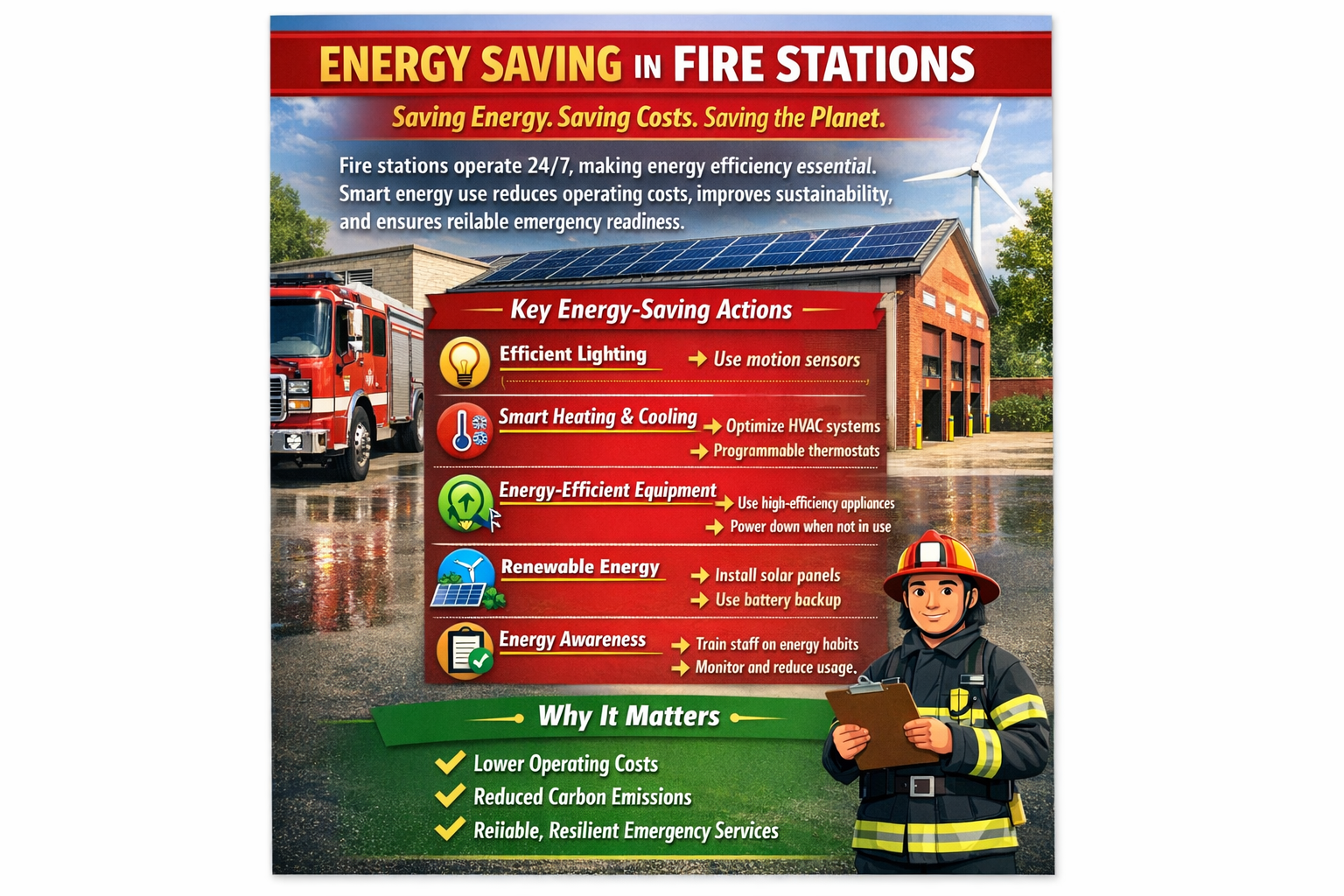
Energy Saving in Fire Stations

Business electricity customers with Half Hourly Power
- Half Hourly Metering - better prices
- UK Manufacturing - better prices
- Larger Energy User - lower energy prices
- Good Credit Co. - better energy prices

Business Sectors
Check Out Other
Business Sectors