
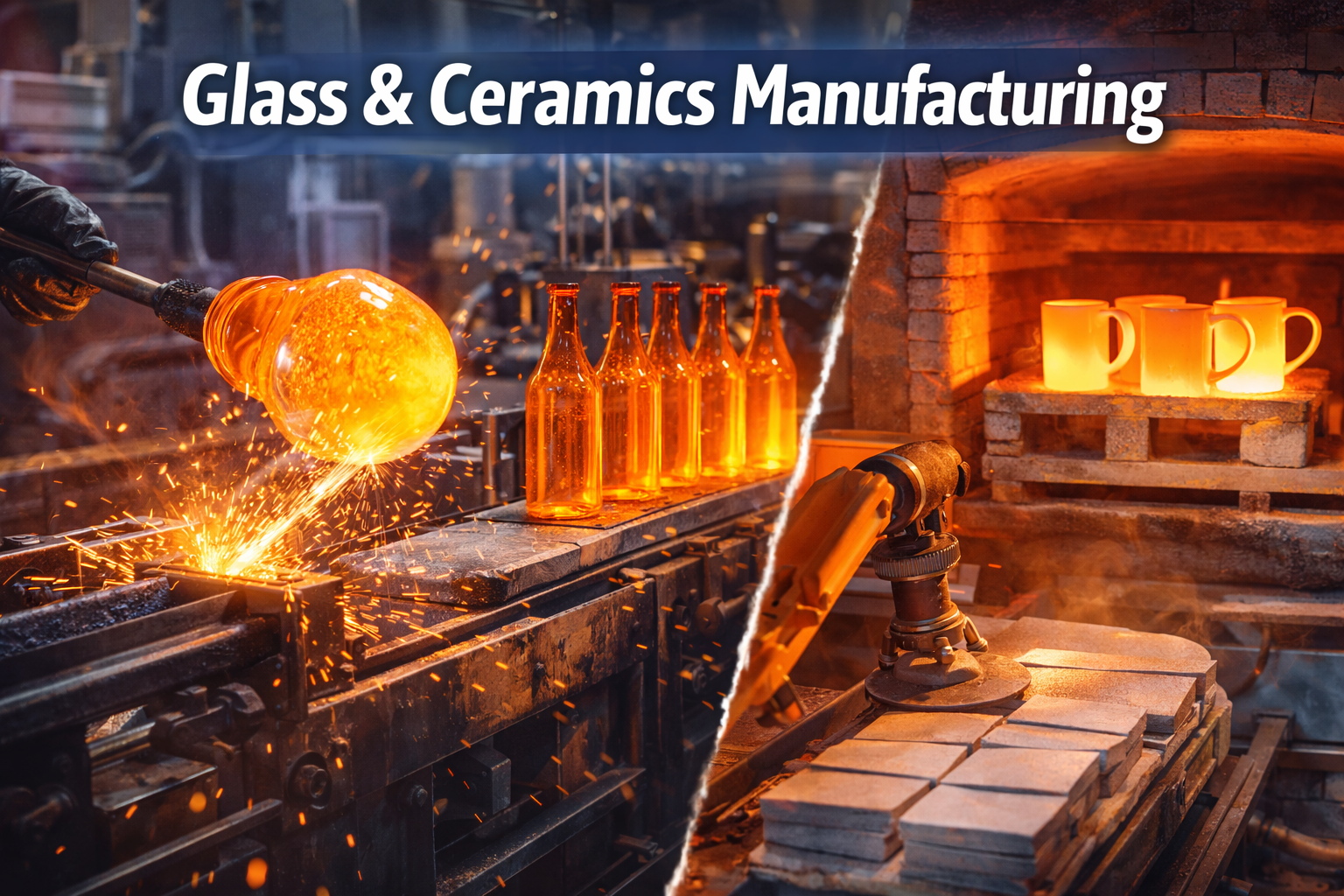
Save Energy for Glass & Ceramics Manufacturing
Energy is a major and unforgiving cost driver in glass and ceramics manufacturing. High-temperature kilns, long cycles, heavy electrical loads, and strict quality standards make even small inefficiencies quietly add tens or hundreds of thousands of pounds to annual operating costs.
Manufacturers know waste exists. The challenge is where to start, what works on-site, and how to achieve savings without harming production or quality.
Here are the most effective ways for glass and ceramic manufacturers to reduce energy costs sustainably.
1. Start with Process-Level Energy Visibility
One of the biggest barriers to savings is not knowing how energy is really being used across your operation.
Rather than looking only at total site consumption, focus on:
- Kiln and furnace energy per batch or per tonne
- Electrical load by production line or asset
Compressed air usage by department - Energy use during idle and non-production hours
This separates productive from wasted energy.
Why it matters:
Without a baseline, you can’t confirm real improvement.
2. Optimise Kilns and Furnaces (Your Biggest Cost Centre)
In glass and ceramic manufacturing, kilns and furnaces typically account for the majority of energy use.
Key improvement opportunities include:
a) Heat Loss Reduction
- Repair damaged refractory linings.
- Improve door seals and access hatch seals.
- Insulate exposed hot surfaces.
- Minimise unnecessary openings during operation
Small reductions in heat loss yield real savings.
b) Temperature Setpoint Control
- Eliminate excessive safety margins in setpoints.
- Match temperature profiles to product requirements
- Avoid overheating for “comfort” or habit.
Many sites run hotter just out of habit.
c) Firing Profile Optimisation
- Review ramp rates and soak times
- Shorten warm-up and cool-down cycles where quality allows
- Reduce unnecessary dwell times.
Better firing curves save fuel while maintaining quality.
3. Recover and Reuse Waste Heat
Glass and ceramic processes generate vast amounts of waste heat—much of which is vented to the atmosphere.
Potential recovery uses include:
- Pre-heating combustion air
- Pre-heating raw materials or feedstock
- Space heating for adjacent buildings
- Hot water generation for cleaning or process use
Simple heat recovery can deliver good returns.
4. Improve Combustion Efficiency
For gas-fired furnaces and kilns:
- Regular burner tuning
- Oxygen and CO monitoring
- Air-to-fuel ratio optimisation
- Elimination of excess air
Poor combustion wastes fuel and reduces efficiency.
Small combustion improvements give lasting savings.
5. Eliminate Idle-Time Energy Waste
At many glass and ceramics sites, energy-intensive assets continue to run even when production has paused.
Look for:
- Kilns are unnecessarily held at a temperature.
- Conveyors, blowers, and fans are left running during downtime.
- Compressed air systems running at full pressure overnight
- Lighting is left on in unoccupied areas.
Automated controls can eliminate large energy waste with little investment.
6. Control Compressed Air (A Hidden Energy Drain)
Compressed air is one of the most expensive utilities in manufacturing.
Key actions:
- Fix leaks (often 20–40% of total output)
Reduce system pressure to the minimum required.
Isolate unused lines
Install flow and pressure monitoring.
Replace air-driven tools with electric alternatives where practical.
Compressed air savings often yield the fastest payback.
7. Upgrade Drives, Motors, and Fans
Electrical efficiency improvements often deliver strong ROI:
- Replace oversized motors
- Install high-efficiency IE3/IE4 motors
- Add variable speed drives (VSDs) to fans, pumps, and blowers.
- Match airflow and pumping rates to actual demand.
VSDs save energy in continuous ventilation and cooling systems.
8. Improve Maintenance Practices
Energy waste often comes from asset degradation, not bad design.
Examples:
- Worn seals and gaskets
- Misaligned burners
- Dirty heat exchangers
- Fouled filters
- Malfunctioning sensors
Preventive maintenance focused on energy-critical assets prevents gradual efficiency erosion.
9. Align Energy Use with Production Schedules
Better coordination between production planning and energy management can unlock savings:
Batch similar products together to reduce temperature cycling
Minimise cold starts
Align peak operations with off-peak tariffs.
Avoid unnecessary warm holding.
Even small scheduling tweaks reduce energy costs.
10. Don’t Rely on One-Off Audits
Many manufacturers commission a single energy audit, fix a few issues, and move on.
The problem:
- Processes change
- Equipment ages
- Production volumes shift
- New inefficiencies appear
Without ongoing checks, energy use increases again.
Continuous improvement secures longer-lasting savings than one-off projects.
What Actually Delivers Sustainable Savings
Across glass and ceramics manufacturing, the most durable results come from:
- Understanding how energy use links to production
- Addressing root causes, not just visible symptoms
- Prioritising operationally realistic actions
- Supporting implementation, not just analysis
- Monitoring performance over time
Energy-saving measures only work when they fit your operational reality.
Final Thought
Saving energy in glass and ceramics manufacturing isn’t about theoretical efficiencies or new technology for its own sake. It’s about practical control, operational alignment, and ongoing improvement.
Active management keeps costs down, reduces surprises, and improves decisions.

Direct Energy Sheep Farming
These are the forms of energy the farm uses day-to-day:
Electricity
Lighting in barns and sheds, electric fencing, water pumps, shearing equipment, milk cooling (for dairy sheep).
Diesel and Fuel
Tractors, transport vehicles, feed mixing, mowing and baling hay, moving sheep trailers.
Gas and Propane
Heating lambing sheds, water heating, sometimes cooking or sterilizing equipment.
Renewable Energy
Solar panels for fencing or water pumps, wind turbines on grazing land, biogas from manure.
Indirect Energy Use
This refers to the energy used to produce and deliver materials the farm depends on:
Feed and Forage
Fuel and fertilisers for growing crops or pasture.
Fertilisers and Lime
Manufacturing and transport of these materials.
Machinery
Energy to manufacture, maintain, and transport tractors, shearing tools, etc.
Buildings and Fencing
Construction materials and upkeep.
Trends Toward Renewable and Efficient Energy
Many sheep farms now use:
Solar Power
Solar-powered electric fences and water troughs
Wind Turbine
Wind turbines on open grazing hills
LED Lighting
Efficient LED lighting and heat recovery in sheds
Glaszing
Rotational grazing to reduce fuel use and fertiliser needs