
Energy Saving in NHS Hospitals
The National Health Service stands as one of the largest energy consumers in the United Kingdom. With hospitals operating continuously, maintaining precise environmental conditions, and powering sophisticated medical equipment around the clock, energy consumption represents both a high operational cost and a substantial carbon footprint. As the NHS works toward its ambitious net-zero targets, understanding where energy savings can be achieved — and how advanced metering technology supports these efforts — becomes essential for every healthcare facility.
The Scale of NHS Energy Consumption
Hospitals rank among the most energy-intensive buildings in any developed nation. Unlike offices that empty each evening or retail spaces with seasonal fluctuations, hospitals never close. Emergency departments remain fully operational at midnight, operating theatres require precise climate control regardless of external weather, and life-sustaining equipment runs without interruption.
This constant demand creates both challenges and opportunities. While baseline consumption remains unavoidably high, the sheer scale of energy use means that even modest percentage improvements translate into substantial savings — both financially and environmentally. For NHS trusts managing increasingly constrained budgets, energy efficiency offers one pathway toward redirecting resources back into patient care.
Key Areas for Energy Savings in Hospital Environments
Heating, Ventilation, and Air Conditioning
HVAC systems typically account for the largest single share of hospital energy consumption, often representing 40% or more of total energy use. Hospitals require precise temperature and humidity control across diverse environments — from operating theatres that demand strict parameters to general wards that require comfortable patient conditions.
Opportunities for savings include upgrading to variable-speed drives for fans and pumps, implementing smart building management systems that adjust output based on occupancy and external conditions, and ensuring regular maintenance to prevent inefficient operation. Heat recovery systems capture warmth from exhaust air, reducing the energy required to condition incoming fresh air. Zoning systems allow different areas to maintain appropriate conditions, preventing unnecessary heating or cooling of unoccupied spaces.
Lighting Systems
Hospitals feature vast floor areas that require illumination across varied settings. Clinical areas need bright, consistent lighting for accurate diagnosis and treatment, while corridors and administrative spaces can operate effectively with lower levels of lighting. Traditional fluorescent lighting still predominates in many older NHS buildings, presenting significant upgrade opportunities.
LED technology offers dramatic efficiency improvements, typically reducing lighting energy consumption by fifty to seventy per cent compared to older systems. Beyond simple lamp replacement, intelligent lighting controls multiply these savings. Occupancy sensors ensure lights operate only when spaces are actively used, while daylight harvesting dims artificial lighting when natural light provides sufficient illumination. In a typical district general hospital, comprehensive lighting upgrades can reduce overall energy consumption by ten to fifteen per cent.
Medical and Laboratory Equipment
Modern healthcare depends on sophisticated equipment that operates continuously. Imaging suites housing MRI and CT scanners consume substantial power, as do pathology laboratories with centrifuges, analysers, and refrigeration units. While clinical requirements dictate much of this consumption, there are opportunities for optimisation.
Equipment scheduling ensures devices enter low-power modes during quiet periods where clinically appropriate. Regular maintenance maintains optimal efficiency, while procurement policies increasingly favour equipment with superior energy performance. Some trusts have achieved notable savings simply by ensuring equipment powers down fully rather than remaining on standby when not required.
Catering and Kitchen Facilities
Hospital kitchens prepare thousands of meals daily, operating industrial cooking equipment, refrigeration, and dishwashing systems. Energy-efficient catering equipment, properly maintained extraction systems, and intelligent scheduling of cooking activities all contribute to reduced consumption. Some hospitals have achieved significant savings through reorganising meal preparation schedules to concentrate cooking during periods of lower overall demand.
Laundry Services
Whether operated in-house or outsourced, hospital laundry consumes substantial energy. Modern washing equipment uses less water and requires less heating, while heat recovery from dryer exhaust captures energy that would otherwise be lost. Optimising load sizes and wash temperatures based on actual soiling levels rather than default settings provides additional savings.
Hot Water Systems
Hospitals require continuous hot water supplies for clinical, catering, and general purposes. Traditional systems often maintain large volumes at high temperatures regardless of actual demand. Point-of-use heating, improved insulation, and demand-based controls reduce the energy wasted maintaining temperature in distribution pipework and storage vessels.
Building Fabric and Insulation
Many NHS buildings date from eras when energy costs attracted less attention than they do today. Improving insulation, upgrading windows, and addressing air leakage reduce heating and cooling requirements year-round. While major fabric improvements often require capital investment, they deliver savings over decades of subsequent operation.
Half-Hourly Meters: Precision Monitoring for Intelligent Management
Half-hourly meters represent a fundamental tool for serious energy management. Unlike traditional meters that provide only cumulative readings, half-hourly meters record consumption data at 30-minute intervals throughout the day. This granular information transforms how organisations understand and manage their energy use.
How Half-Hourly Meters Function
These advanced meters automatically record consumption every thirty minutes, transmitting data to energy suppliers and management systems. This creates detailed consumption profiles showing exactly when energy is used, how usage patterns vary across days and seasons, and where anomalies suggest waste or malfunction.
For sites consuming above certain thresholds, half-hourly metering is mandatory. Most NHS hospitals comfortably exceed these thresholds, meaning they already have half-hourly electricity meters installed. However, many trusts underutilise the valuable data these meters generate.
Benefits for NHS Hospitals
Identifying Waste and Inefficiency
Half-hourly data reveals consumption patterns invisible to monthly billing. A hospital might discover that energy consumption remains surprisingly high during night hours, when activity reduces, indicating that equipment is running unnecessarily or that building systems are failing to enter setback modes. Spikes at unexpected times might reveal faulty controls or equipment operating outside intended schedules.
Validating Energy Saving Measures
When hospitals invest in efficiency improvements, half-hourly data provides clear evidence of impact. Comparing consumption profiles before and after interventions demonstrates the actual savings achieved, supports business cases for further investment, and identifies measures that underperformed expectations.
Optimising Procurement and Tariffs
Understanding precisely when consumption occurs enables smarter energy procurement. Hospitals can negotiate contracts reflecting their actual usage patterns and potentially shift flexible loads to periods when energy costs less. Some trusts have achieved substantial savings simply by better aligning procurement strategies with actual consumption profiles revealed through half-hourly analysis.
Supporting Demand Management
As energy grids incorporate more renewable generation, the ability to shift demand becomes increasingly valuable. Hospitals understanding their consumption patterns can identify loads suitable for flexibility — perhaps running certain equipment earlier or later to support grid stability while reducing costs.
Detecting Faults and Anomalies
Sudden changes in consumption patterns often indicate equipment faults. Half-hourly monitoring enables rapid detection, allowing maintenance teams to address issues before they escalate into major failures or generate excessive waste.
Implementing Effective Energy Management
Half-hourly meters provide data, but data alone achieves nothing without analysis and action. Successful NHS trusts combine metering infrastructure with dedicated energy management resources — whether internal specialists or external consultants — who translate data into actionable insights.
Regular reporting to senior leadership maintains focus on energy performance, while engagement with clinical and operational staff ensures that efficiency measures respect patient care priorities. The most successful programmes treat energy management as continuous improvement rather than one-time projects.
Conclusion
NHS hospitals face genuine constraints on energy reduction — patient safety and clinical effectiveness must always take precedence. However, substantial savings remain achievable through systematic attention to building services, equipment efficiency, and operational practices. Half-hourly metering provides the foundation for intelligent energy management, transforming vague aspirations into measurable programmes delivering real results. For NHS trusts navigating financial pressures while pursuing environmental commitments, energy efficiency represents an investment that serves patients, budgets, and planet alike.
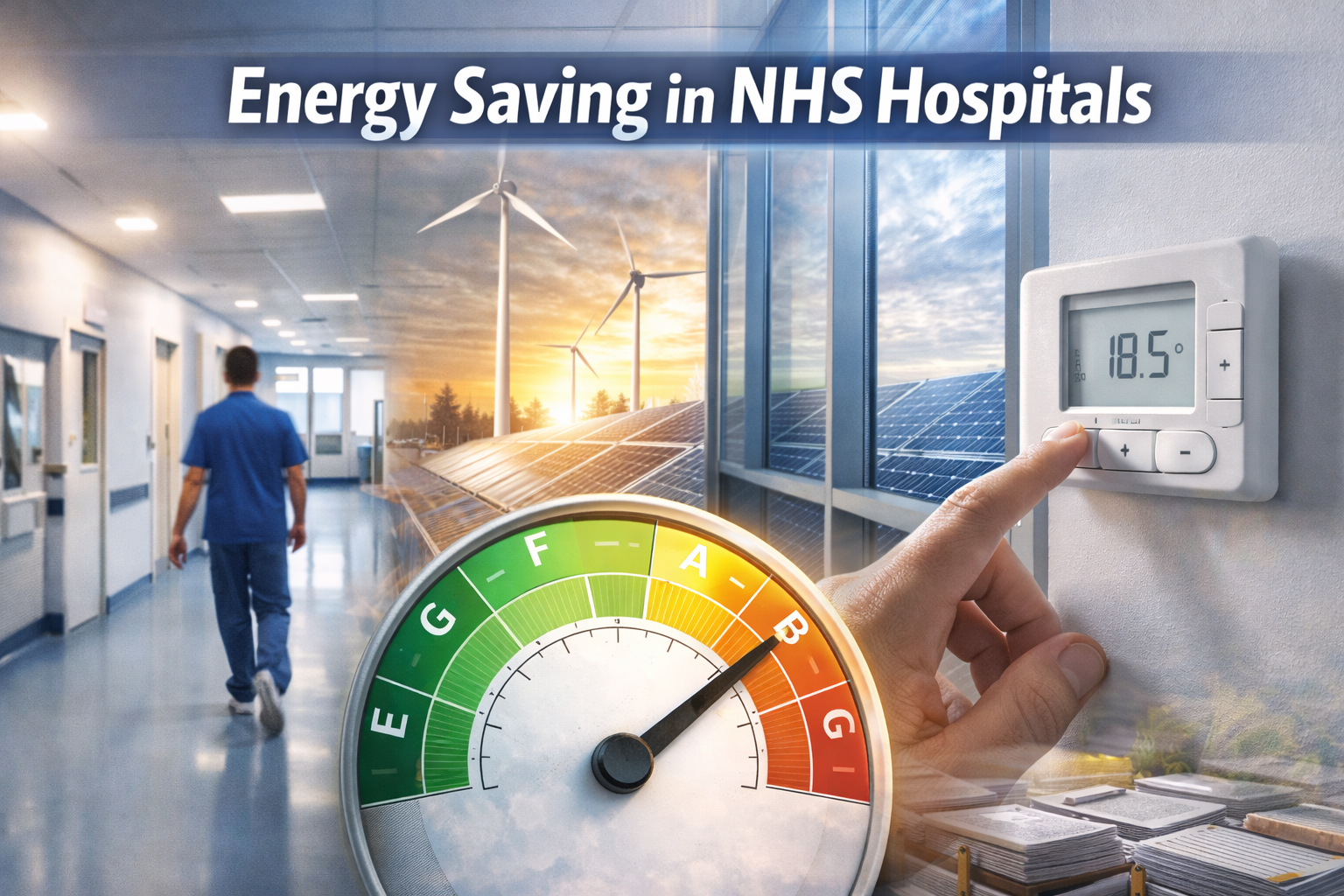
Energy Saving in NHS Hospitals

Business electricity customers with Half Hourly Power
- Half Hourly Metering - better prices
- UK Manufacturing - better prices
- Larger Energy User - lower energy prices
- Good Credit Co. - better energy prices

Business Sectors
Check Out Other
Business Sectors