
Energy Saving in Religion Charities
Saving Energy for Religious Charities in the UK: A Practical Guide to Reducing Costs and Environmental Impact
Religious charities across the United Kingdom face unique challenges in energy consumption. From historic churches with centuries-old architecture to modern community centres hosting daily activities, these organisations must balance their spiritual mission with the practical realities of finances. With energy costs continuing to place pressure on charitable budgets, finding effective ways to reduce consumption has never been more important. This article explores how religious charities can embrace energy efficiency while continuing to serve their communities.
Understanding VAT Relief for Charitable Energy Costs
British charities benefit from certain VAT reliefs that can help reduce energy costs. Qualifying charities may be eligible for a reduced VAT rate of five per cent on fuel and power supplies, compared to the standard twenty per cent rate. This relief applies when at least 60% of the fuel or power is used for charitable, non-business purposes. Religious charities using energy primarily for worship services, community outreach, and charitable activities typically qualify for this reduced rate.
To access this relief, charities must provide their energy supplier with a declaration confirming their eligibility. Many religious organisations are unaware of this entitlement and continue paying the full VAT rate unnecessarily. Reviewing current energy contracts and ensuring the appropriate VAT rate is being applied represents an immediate opportunity to reduce costs without any physical changes to buildings or operations.
Practical Strategies for Reducing Energy Consumption
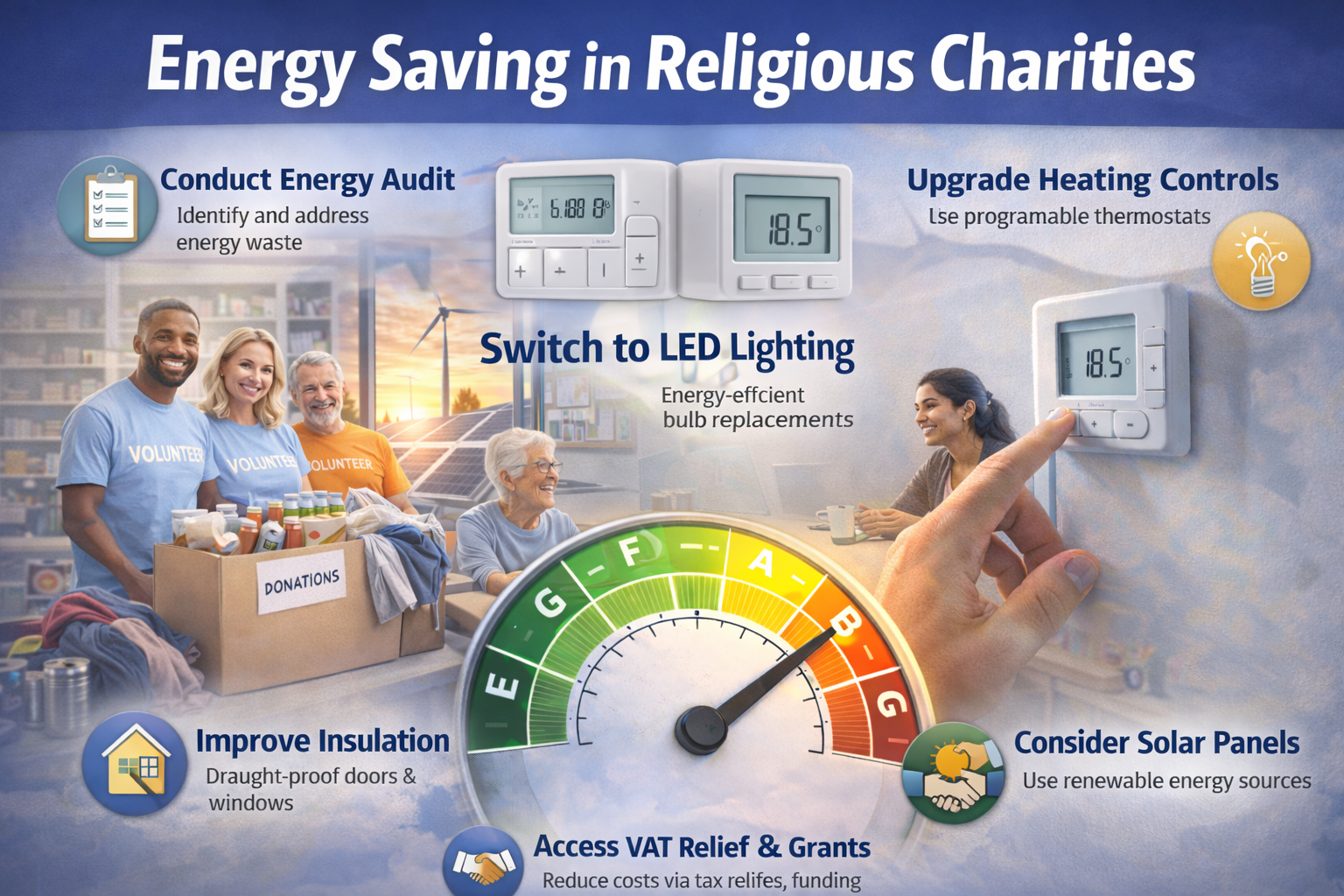
The journey toward energy efficiency begins with understanding current consumption patterns. Religious charities should conduct thorough energy audits to identify where energy is being used and where waste occurs. Many utility companies offer free or subsidised audits for charitable organisations, and local council programmes may provide additional support. These assessments reveal opportunities that might otherwise go unnoticed, from draughty windows to inefficient heating systems operating at inappropriate times.
Heating accounts for the largest energy expense in most religious buildings. Installing programmable thermostats and heating controls allows organisations to heat spaces only when they are in use, avoiding the common practice of maintaining warmth in empty buildings. Zoning heating systems so that only occupied areas receive warmth can dramatically reduce consumption. For buildings used primarily for weekly services, careful scheduling of heating start times ensures comfortable temperatures for congregants without the need for hours of unnecessary pre-heating.
Improving insulation offers long-term benefits that justify the initial investment. While historic buildings may face restrictions on external modifications, internal measures such as secondary glazing, draught-proofing doors and windows, and insulating roof spaces can significantly reduce heat loss. Many religious charities have successfully applied for heritage grants and environmental funding to support these improvements, recognising that protecting historic buildings and reducing energy consumption are complementary goals.
Lighting presents another significant opportunity for savings. Replacing traditional incandescent and halogen bulbs with LED alternatives reduces lighting electricity consumption by up to 90%. LEDs also generate less heat, reducing cooling requirements in the summer months. Installing motion sensors in areas with intermittent use, such as toilets, storage rooms, and corridors, ensures lights operate only when needed. In main worship spaces, dimming controls allow light levels to be adjusted according to activities and available natural daylight.
Renewable energy generation offers religious charities the opportunity to produce their own power while demonstrating environmental leadership. Solar panels installed on suitable roof spaces can generate electricity year-round, with excess power either stored in batteries or exported to the grid. While installation requires a capital investment, various grants and financing schemes are available specifically for charitable organisations. Some religious charities have funded solar installations through community share schemes, engaging congregants as investors in their building’s sustainable future.
Engaging Communities in Energy Conservation
Successful energy reduction requires the involvement of everyone who uses religious buildings. Communicating the importance of energy conservation and providing practical guidance helps create a culture of efficiency. Simple actions such as closing doors, switching off lights when leaving rooms, and promptly reporting maintenance issues can collectively yield meaningful savings. Many religious traditions emphasise stewardship and care for the environment, providing a natural framework for discussing energy conservation as an expression of faith values.
Appointing energy champions within the organisation creates accountability and maintains focus on efficiency goals. These volunteers can monitor consumption, identify emerging issues, and keep energy conservation visible within the community. Regular reporting on energy use and cost savings demonstrates progress and maintains engagement over time.
Accessing Support and Funding
Religious charities need not undertake energy efficiency improvements alone. Numerous organisations provide guidance, technical support, and funding specifically for charitable buildings. The Church of England’s environment programme, Islamic Relief’s green initiatives, and similar faith-based environmental movements offer resources tailored to religious contexts. Local authorities frequently operate grant schemes supporting energy efficiency in community buildings, while national programmes such as the Energy Redress Scheme provide funding for energy-related charitable projects.
Professional energy consultants with experience in heritage and religious buildings can provide valuable expertise, helping organisations navigate the complexities of improving historic structures while respecting their architectural significance. Investing in professional advice often yields returns many times greater than the initial cost through optimised improvement strategies and successful funding applications.
Conclusion
Religious charities across the United Kingdom have both the opportunity and the responsibility to reduce their energy consumption. Through practical measures ranging from simple behavioural changes to significant building improvements, these organisations can dramatically reduce costs while demonstrating environmental leadership consistent with their values. By taking advantage of available VAT reliefs, accessing appropriate funding, and engaging their communities in conservation efforts, religious charities can ensure that more of their resources flow toward their charitable mission rather than disappearing through draughty windows and inefficient systems. The path to energy efficiency is a journey that honours both financial prudence and care for creation.
Energy Saving in Religious Charities

Business electricity customers with Half Hourly Power
- Half Hourly Metering - better prices
- UK Manufacturing - better prices
- Larger Energy User - lower energy prices
- Good Credit Co. - better energy prices

Business Sectors
Check Out Other
Business Sectors