
Energy Saving in Taxi or Logistics Firms
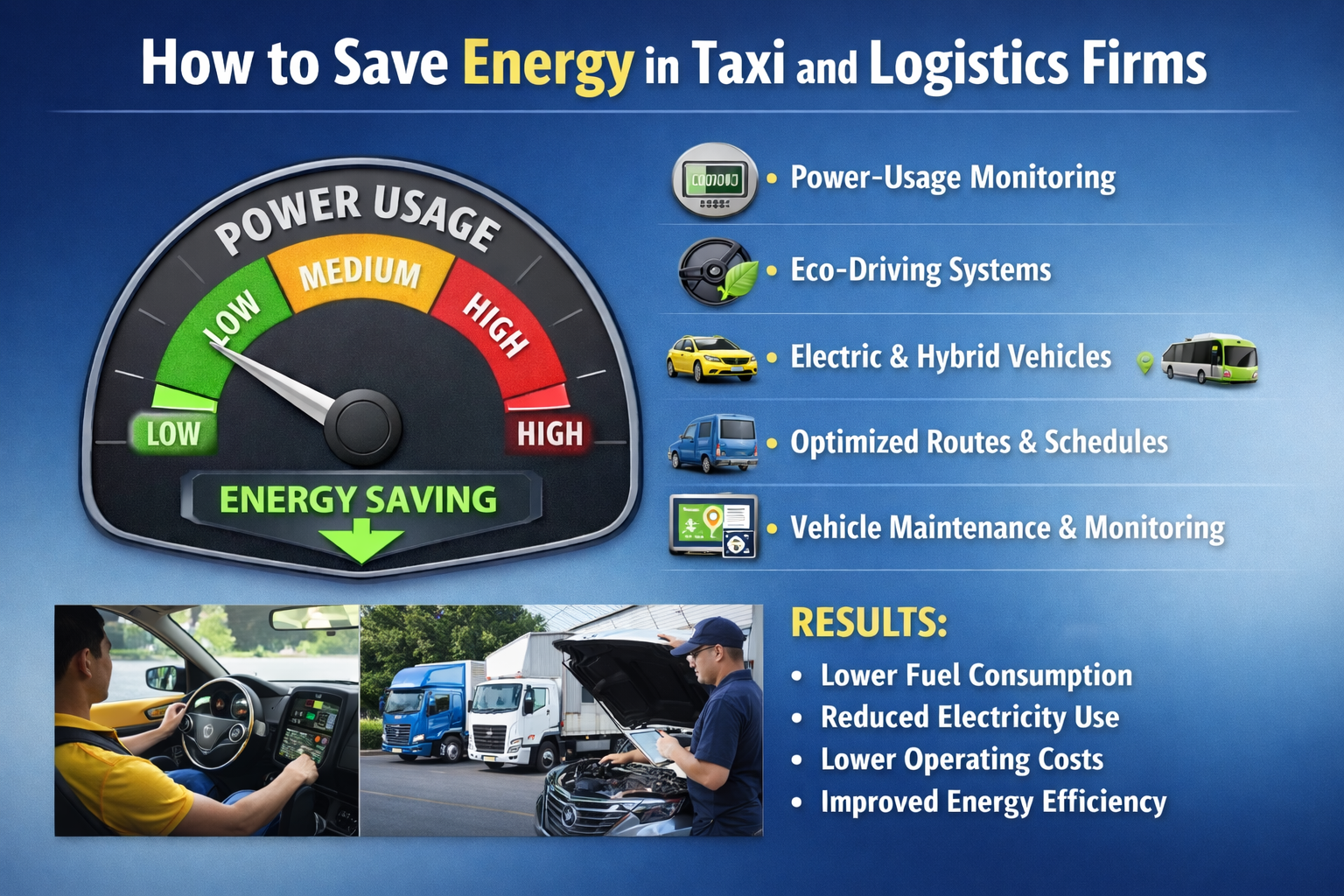
The UK’s taxi and logistics sectors are the lifeblood of the economy, moving people and goods across cities, towns and rural areas every day. Yet with fuel and energy costs representing up to 40% of operational expenditure for many operators, and road transport accounting for 19% of the UK’s greenhouse gas emissions, effective energy management has become critical for profitability and sustainability. At Taurus Utilities Consultants, we’ve spent over 15 years helping transport businesses reduce energy use, cut costs and transition toward net zero. This guide outlines proven strategies tailored to taxi and logistics companies, from vehicle optimisation to infrastructure management and operational best practice.
CONDUCT A COMPREHENSIVE ENERGY AUDIT
Before you implement any energy-saving measures, I would like to point out that you must understand your current consumption. Our consultants recommend a structured audit that covers all aspects of your operations – from vehicles and depots to administrative facilities and supply chains.
Phase 1: Data Collection and Benchmarking
Track all energy streams: Monitor fuel consumption for diesel, petrol and alternative fuels, as well as electricity use at depots, offices and charging points. For electric vehicles (EVs), install smart meters to record charging patterns and energy use per kilometre.
Analyse historical data: Review 12-24 months of fuel and utility bills to identify trends, seasonal variations and cost drivers. For example, we recently worked with a London taxi firm to discover that 20% of their fuel was consumed by vehicles idling in waiting zones during peak hours.
Benchmark performance: Compare your energy use against industry standards using metrics such as litres per kilometre (L/km) for diesel vehicles or kWh per kilometre for EVs. The Freight Transport Association (FTA) and Licensed Taxi Drivers’ Association (LTDA) provide benchmarking data to help you assess your performance relative to peers.
Map your operations: Document all routes, delivery schedules, depot locations and vehicle types to identify high-consumption areas. A logistics company we advised found that its overnight delivery fleet used 30% more fuel than its daytime operations due to inefficient routing.
Phase 2: On-Site Assessment
Inspect vehicles: Check for maintenance issues such as underinflated tyres (increasing fuel use by 5-10%), clogged air filters (reducing efficiency by up to 15%), and faulty exhaust systems. For EVs, assess battery health and charging efficiency.
Survey depots and facilities: Evaluate lighting, heating, ventilation and air conditioning (HVAC) systems, as well as loading bay equipment and storage areas. Typical findings include outdated lighting, poor insulation and inefficient forklift trucks.
Review operational practices: Observe driver behaviour, route planning, loading procedures, and depot management to identify energy-wasting activities, such as aggressive driving, partial loads, and unnecessary equipment use.
Phase 3: Report and Prioritise
Develop a detailed action plan: Document findings, calculate potential savings and outline implementation costs and payback periods. We typically identify 20-35% energy reduction opportunities with payback periods ranging from 3 months to 5 years.
Prioritise initiatives: Focus first on low-cost, quick-win measures (such as tyre pressure monitoring or LED lighting upgrades) to generate immediate savings that can fund larger projects, such as EV transitions or depot modernisation.
OPTIMISE VEHICLE FLEETS FOR MAXIMUM EFFICIENCY
Vehicles represent the single most significant energy expenditure for taxi and logistics companies. Our approach balances immediate improvements with long-term transition planning to meet net zero targets.
Improving Existing Fleet Efficiency
Implement preventive maintenance programmes: Regular servicing ensures vehicles operate at peak efficiency. Key actions include:
- Maintaining correct tyre pressure – saves up to 10% on fuel and extends tyre life.
- Replacing air filters regularly improves fuel economy by 10-15%.
- Using manufacturer – recommended lubricants reduces engine friction and improves efficiency.
- Aligning wheels correctly – prevents uneven tyre wear and reduces fuel use by up to 5%.
Retrofit vehicles for efficiency:
Install aerodynamic enhancements such as roof deflectors, side skirts and trailer tails – can reduce fuel consumption by 10-15% for HGVs and 5-8% for taxis.
Fit fuel-efficient tyres – low-rolling-resistance models cut fuel use by 5-8% and last longer.
Upgrade to LED lighting – reduces electricity use for vehicle lights by 60% and improves visibility.
Install engine management systems – optimise fuel injection and reduce idling, with typical savings of 8-12%.
Reduce vehicle weight: Remove unnecessary equipment and optimise load distribution. For logistics companies, this might mean using lighter packaging or removing unused racks from vehicles – every 100kg reduction can improve fuel efficiency by 2-3%.
Transitioning to Low-Emission Vehicles
Evaluate electric vehicles (EVs): With advances in battery technology and growing charging infrastructure, EVs are becoming increasingly viable for both taxis and logistics operations. Electric taxis can reduce energy costs by up to 70% compared to diesel models, while electric vans and HGVs offer similar savings for urban and regional routes.
Consider hybrid and alternative fuels: For longer-distance operations where EVs are not yet practical, hybrid vehicles, hydrogen fuel cells, or biomethane can deliver significant savings. We recently advised a logistics company to switch 30% of its fleet to biomethane, cutting fuel costs by 40% and emissions by 80%.
Plan charging and refuelling infrastructure:
Install smart charging points at depots and key locations – use time-of-use tariffs to charge during off-peak hours when electricity is cheaper.
For alternative fuels, partner with refuelling providers to secure competitive rates and ensure reliable access.
Use telematics data to optimise charging schedules based on vehicle usage patterns – ensuring vehicles are charged when needed and avoiding unnecessary energy use.
OPTIMISE DEPOT AND INFRASTRUCTURE ENERGY USE
Depots, warehouses and administrative facilities represent significant energy demand – optimising these sites can deliver substantial, ongoing savings.
Depot and Warehouse Improvements
Upgrade lighting systems: Replace fluorescent and high-pressure sodium lights with LEDs – reduces energy use by 50-70% and has a payback period of less than 12 months. Install motion sensors and daylight harvesting controls to ensure lights are only active when needed. At a logistics depot in Birmingham, we reduced lighting energy use by 65% through these upgrades.
Improve HVAC efficiency:
- Install high-efficiency boilers, heat pumps or air conditioning systems – can reduce energy use by 30-40%.
- Implement smart controls that adjust temperature based on occupancy and external conditions.
- Improve insulation in roofs, walls and floors – cuts heating costs by 30-40% for older buildings.
Optimise loading bay operations:
- Install speed gates and dock seals to reduce heat loss from loading bays – can cut heating costs by 15-20%.
- Use energy-efficient forklift trucks and pallet movers – electric models use 70% less energy than diesel equivalents.
- Implement efficient loading practices to minimise vehicle idling time at depots.
On-Site Energy Generation and Procurement
Generate your own energy: Install solar panels on depot roofs and warehouse buildings to power facilities and vehicle charging. A taxi firm we worked with in Manchester now generates 25% of its depot’s electricity from solar panels, saving £22,000 annually.
Implement energy storage: Use battery systems to store excess solar power or purchase electricity during off-peak hours for use during peak demand periods. This can reduce demand charges by up to 50% for sites with high electricity use.
Secure competitive energy contracts: Work with consultants to negotiate fixed-price contracts for electricity and gas, protecting against price volatility. We help clients secure rates that are typically 10-15% lower than standard tariffs.
ENHANCE OPERATIONAL PRACTICES
Even with modern vehicles and infrastructure, operational choices play a critical role in energy saving. Our consultants focus on embedding efficiency into every aspect of your business.
Driver Training and Performance Management
Deliver eco-driving training: Teach drivers techniques such as smooth acceleration and deceleration, maintaining steady speeds, anticipating traffic conditions and avoiding unnecessary idling. Our programmes typically deliver 8-15% fuel savings, with payback within 3 months.
Monitor performance with telematics: Install GPS and telematics systems to track driver behaviour, vehicle speed, idling time and route efficiency. Use this data to identify areas for improvement and reward drivers who achieve energy-saving targets.
Incentivise efficiency: Introduce bonus schemes or recognition programmes for drivers who consistently achieve low fuel consumption. A logistics company we advised reduced fuel use by 12% within 6 months of implementing a performance-based incentive scheme.
Route Planning and Scheduling
Optimise routes using data: Use route-planning software that accounts for traffic conditions, delivery locations, to protect vehicle efficiency and minimise distance and fuel use. For example, we helped a courier company reduce mileage by 18% by reconfiguring their delivery routes.
Consolidate loads: Combine deliveries and collections to reduce the number of vehicles on the road. This not only saves fuel but also reduces congestion and improves productivity.
Schedule operations strategically: Plan deliveries and collections to avoid peak traffic periods, reducing idling time and improving fuel efficiency. For taxis, use booking systems to minimise empty running between jobs.
Supply Chain Collaboration
Work with customers to optimise deliveries: Coordinate delivery schedules and routes to reduce wait times and improve efficiency. For example, arranging for multiple deliveries to the exact location on the same day can significantly reduce fuel use.
Partner with other businesses: Share transport resources or consolidate loads with complementary companies to reduce empty running. This is particularly effective for rural routes or low-volume deliveries.
CONCLUSION
Saving energy in taxi and logistics operations is not just about reducing costs – it’s about building a more sustainable, resilient business that can thrive in a changing regulatory and economic environment. At Taurus Utilities Consultants, we’ve seen that operators who take a structured approach to energy management can achieve 20-35% reductions in energy costs while making significant progress toward their net zero targets. By combining vehicle optimisation, infrastructure improvements and operational best practice, you can build a more efficient, profitable and environmentally responsible business.
With fuel prices continuing to fluctuate and government targets for net-zero transport by 2050, there has never been a better time to take action. Whether you’re a small taxi firm or a large logistics provider, the opportunities to save energy and improve performance are within reach.
For more information on how Taurus Utilities Consultants can support your energy-saving journey
Energy Saving in NHS Hospitals

Business electricity customers with Half Hourly Power
- Half Hourly Metering - better prices
- UK Manufacturing - better prices
- Larger Energy User - lower energy prices
- Good Credit Co. - better energy prices

Business Sectors
Check Out Other
Business Sectors