
Energy Saving in Iron and Metal Manufacturing
How to Save Energy in UK Iron and Metal Manufacturing: A Practical Guide from Taurus Utilities Consultants.
The UK iron and metal manufacturing sector contributes £7.2 billion annually to the national economy and employs over 30,000 people across England, with significant operations in Tyne and Wear’s industrial corridor. However, it accounts for 16% of the country’s industrial energy demand. It faces rising costs, stringent carbon targets under the UK Net Zero Strategy, and unique regional challenges, such as grid capacity constraints in the Northeast. Energy efficiency is no longer optional: it is essential for competitiveness and sustainability.
Taurus Utilities Consultants has partnered with UK metal manufacturers to deliver average energy savings of 18%, with half-hourly metering playing a pivotal role in many successful projects. This 1000-word guide outlines actionable strategies tailored to the sector, including how advanced metering drives measurable improvements.
Baseline Assessment – The Foundation for Savings
Before implementing any measures, understanding your energy use patterns is critical. This requires accurate data capture and analysis, where half-hourly meters are transformative.
Actionable Steps
Install or optimise half-hourly (HH) meters: Unlike standard meters that record daily or weekly consumption, HH meters capture data every 30 minutes, providing granular visibility into how energy use aligns with production cycles. In Tyne and Wear, many manufacturers have leveraged the UK’s Smart Metering Implementation Programme to upgrade at reduced cost. HH data reveals peaks in demand during non-critical production phases, identifies equipment operating inefficiently outside scheduled runs, and enables precise tracking of savings from implemented measures.
Conduct an ISO 50001-aligned audit: Comply with the Energy Savings Opportunity Scheme (ESOS) – mandatory for large energy users – and use audit findings to map consumption across melting, forming, and finishing processes.
Review regulatory obligations: Ensure alignment with the UK Emissions Trading System (UK ETS) and Industrial Emissions Directive, as HH data simplifies carbon accounting and helps forecast tax liabilities.
Case Study Snippet: A Gateshead-based steel fabricator upgraded to HH metering as part of their ESOS audit. Within 3 months, the data identified that compressors were running at full load overnight when production was paused – a fix that delivered £42,000 in annual savings.
Process Optimisation – Targeting High-Consumption Operations
Core processes like melting and heating account for up to 75% of total energy use. Half-hourly metering enables precise optimisation of these systems.
Key Strategies
Melting Operations: Electric arc furnaces (EAFs) and blast furnaces are the biggest energy users.
Use HH data to match furnace operation to time-of-use tariffs – shifting non-urgent melts to off-peak periods can reduce costs by 20-30%.
Implement scrap preheating systems using waste heat from exhausts; HH metering lets you precisely measure the energy savings per batch.
Upgrade insulation with ceramic fibre materials and use HH data to track reductions in heat loss over time.
Heat Treatment: For annealing and tempering processes:
Install modern control systems linked to HH meters to regulate temperatures and prevent overheating precisely.
Schedule batches to maximise furnace utilisation and reduce cold starts – data from HH meters helps identify optimal production windows.
Forming and Rolling: Fit variable-frequency drives (VFDs) to mill motors and fine-tune speed settings using HH data to meet load requirements, reducing energy waste by up to 35%.
Case Study Snippet: A Teesside iron foundry used HH metering to optimise EAF run times alongside UK Power Networks’ demand response scheme. By reducing load during peak grid periods, they earned £28,000 in annual incentives while cutting overall energy use by 12%.
Waste Heat Recovery – Turning Loss into Gain
Iron and metal manufacturing generates substantial waste heat, which can be captured and reused – with HH metering ensuring systems operate efficiently.
Practical Applications
Install heat exchangers: Capture thermal energy from flue gas stacks or cooling systems to preheat combustion air, heat facility water, or generate electricity via an organic Rankine cycle (ORC). Use HH data to monitor how much recovered heat displaces purchased energy.
Leverage UK incentives: Apply for grants through the Industrial Energy Transformation Fund (IETF) or Non-Domestic Renewable Heat Incentive (RHI) – HH metering data is required to demonstrate savings and claim payments.
Repurpose process heat: Use waste heat to maintain temperature-controlled storage areas. HH metering helps quantify the reduction in auxiliary heating system use.
In Tyne and Wear, regional grid operator Northern Powergrid supports waste heat projects by providing data on local grid capacity, helping manufacturers integrate systems without impacting reliability.
Infrastructure Upgrades – Investing for Long-Term Savings
Outdated equipment and systems often waste energy unnecessarily. Half-hourly metering helps prioritise upgrades and measure their impact.
Priority Areas
Lighting and Buildings: Replace traditional lighting with LEDs (using 80% less energy) and install occupancy sensors. Use HH data to track savings in non-production areas, such as offices and warehouses. Upgrade insulation to meet UK Building Regulations 2022 – HH meters confirm reduced heating demand.
Compressed Air Systems: Leaks can waste 30% of the energy in compressed air. Conduct regular leak surveys, then use HH data to verify improvements from repairs or upgrades to energy-efficient rotary screw compressors.
Power Distribution: Install power factor correction equipment to reduce electrical losses. HH metering provides real-time data on power factor performance, ensuring systems operate optimally.
Enhanced Capital Allowance (ECA) Scheme: Claim 100% first-year tax relief on qualifying equipment – HH data simplifies tracking of energy savings to support claims.
Management Practices – Sustaining Improvements
Technical solutions deliver maximum value when supported by strong processes and engaged teams.
Actionable Initiatives
Appoint an energy manager: Task them with analysing HH data weekly to identify anomalies or new savings opportunities.
Train operators: Educate staff on efficient equipment use – for example, proper furnace loading and shutdown procedures. Use HH data to demonstrate how individual actions impact overall consumption.
Set measurable KPIs: Use baseline data from HH meters to establish targets (e.g., 10% reduction in melting energy use by year-end) and share progress with teams to drive accountability.
Participate in demand response: Use HH data to identify flexible load periods, then enrol in schemes offered by UK energy suppliers – businesses can earn incentives for reducing or shifting demand during peak grid times.
Conclusion
Saving energy in UK iron and metal manufacturing requires a combination of technical upgrades, strategic planning, and data-driven decision-making – with half-hourly metering as the cornerstone of effective management. For operations in Tyne and Wear and across England, aligning efficiency measures with UK regulations and incentives ensures investments deliver both financial and environmental returns. Taurus Utilities Consultants works with clients to integrate advanced metering, optimise processes, and build lasting energy management capabilities. By taking a structured approach – from baseline assessment to sustained monitoring – manufacturers can turn energy efficiency into a competitive advantage that supports growth in a low-carbon economy.
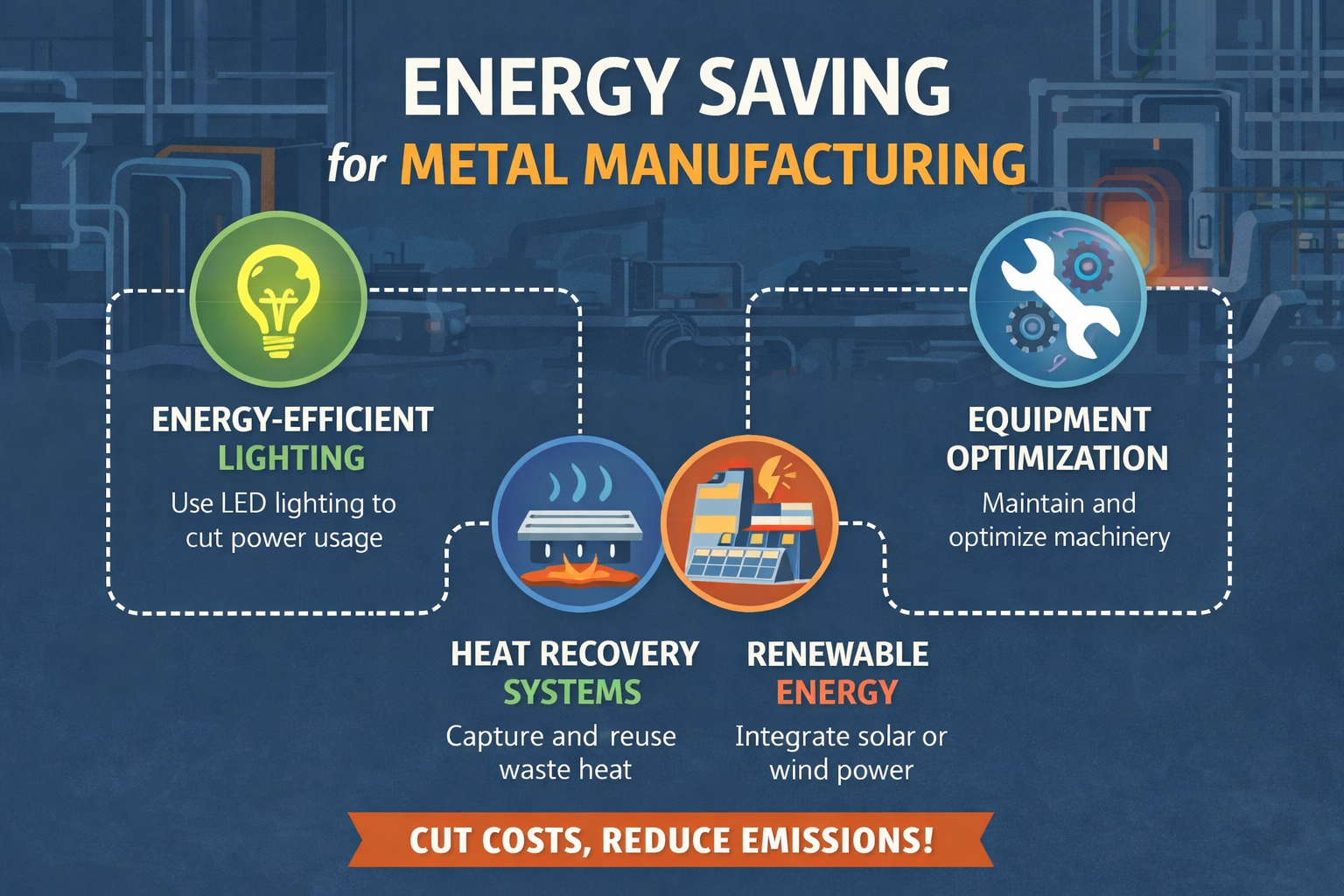
Energy Saving in Iron and Metal Manufacturing

Business electricity customers with Half Hourly Power
- Half Hourly Metering - better prices
- UK Manufacturing - better prices
- Larger Energy User - lower energy prices
- Good Credit Co. - better energy prices

Business Sectors
Check Out Other
Business Sectors